

Let’s talk about the thing nobody tells you when you Google “how to become a digital marketer”:
SME owners in Nigeria care about one thing:
“Can this person actually bring customers and help me stop leaving money on the table?”
If you can be that person, they’ll fight to hire you. Literally call you back, follow up, recommend you, increase your pay… all of it.
So let’s walk through how you become that kind of digital marketer – the one Nigerian SMEs actually compete for.
What “Becoming a Digital Marketer” Really Means (When SMEs are Paying)
When most people think about how to become a digital marketer, they picture running Instagram ads, posting “creative” flyers, maybe boosting a post or two.
SME owners are thinking something very different:
- “Can you bring me more serious enquiries?”
- “Can you help my team handle all these calls better?”
- “Can you show me, in numbers, that what you’re doing is working?”
So if you want to be the marketer Nigerian SMEs fight to hire, your goal isn’t:
“I want to learn digital marketing.”
Your goal is:
“I want to learn how to create and manage a system that brings in customers and doesn’t waste opportunities.”
That sounds big, but we’re going to break it down.
The High-income Digital Skills SMEs Actually Pay for
Let’s be honest: “I know social media” is not a high-income skill anymore. Everyone and their cousin knows how to post on Instagram.
If you want to stand out – and earn more – you need high income digital skills. The kind of skills that directly touch revenue.
Think about these as the core stack:
a) Traffic skills: get people in the door

This is where you learn:
- Running paid ads (Meta Ads, Google Ads)
- Creating content that actually drives clicks, not just likes
- Writing simple landing pages that make people want to call, chat, or fill a form
SMEs love marketers who can say:
“We spent ₦X on this campaign, it brought Y leads, Z turned into paying customers.”
b) Funnel skills: guide people from “I saw you” to “I called you”
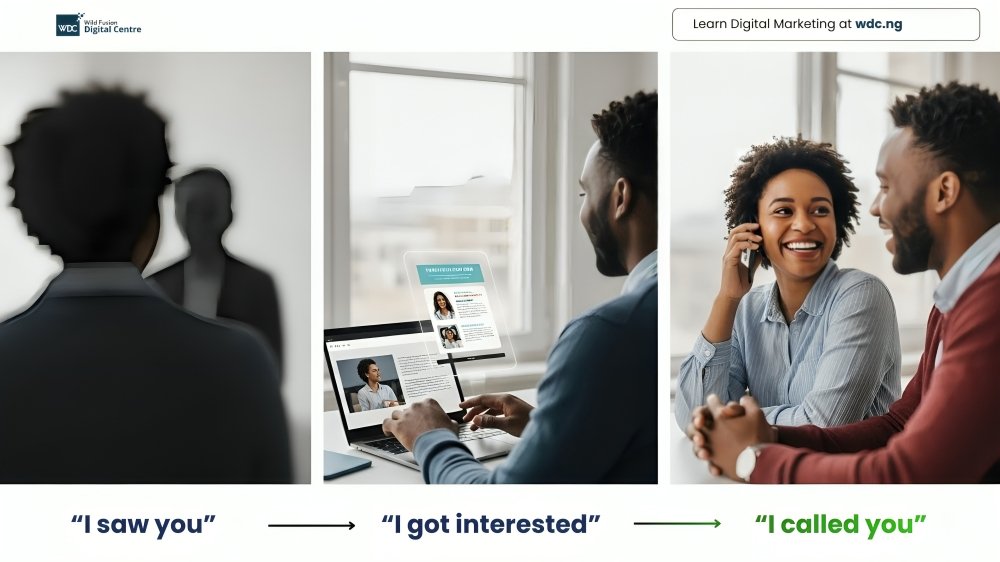
This is where you start connecting dots:
- Ad → Landing page → WhatsApp or phone call
- Email follow-up for people who showed interest
- Retargeting people who visited but didn’t take action
This is where “high income digital skills” really live – in your ability to design journeys, not just visuals.
c) Analytics skills: prove it or it didn’t happen

You don’t have to be a full data scientist. But you do need to:
- Set up basic tracking (UTM links, events)
- Read simple dashboards
- Explain results in plain language to a non-technical SME owner
When you can say, “This campaign brought 45 phone calls and 12 sales,” you instantly feel different from every other “social media manager.”
Why Smart SMEs Want Marketers Who Understand Phone Calls
Here’s the part most beginner marketers ignore.
In Nigeria, a lot of business still ends on the phone:
- Someone sees an ad
- Clicks through to a website or Instagram
- Then they call to ask questions, negotiate, or confirm it’s not a scam
If you ignore that phone step, you’re ignoring where the money actually closes.
That’s why serious SMEs love digital marketers who think beyond “online” and understand how the business phone system works too.
Imagine you can sit with an SME owner and say:
“We’ll run campaigns to drive calls. To make sure we don’t waste them, let’s use a proper business phone system so your whole team can share one number, route calls properly, and track what’s happening.”
Now you’re not just “doing marketing”. You’re designing a money pipeline.
Turn Marketing Leads into Phone Conversations (Without Losing Them)
Let’s zoom in here, because this is a big unlock.
You know that moment when a lead finally calls… and the line is switched off, or someone forgets to call back, or they get bounced between three different numbers?
That’s where a lot of SMEs lose money.
A marketer SMEs fight to hire things like this:
a) You design for calls on purpose
You don’t just add a random phone number in the caption. You:
- Use “Call” CTAs on ads when it makes sense
- Add click-to-call buttons on landing pages
- Make sure the number is visible and consistent everywhere
b) You understand how call forwarding works
This sounds “technical”, but it’s not that deep.
Basic idea:
A customer calls one business number → the system can forward that call to whoever is available.
So instead of the owner’s personal line getting overwhelmed (or off), calls can:
- Ring multiple team members
- Route to sales during working hours and voicemail after
- Forward from one person to another if the first person can’t pick up
If you understand how call forwarding works, you can build better campaigns and advise SMEs better.
You’re not fixing their telecom setup yourself. You’re just the smart marketer who knows enough to say, “We’re losing leads because calls are going to the wrong place – let’s fix that.”
Use Data to Prove You’re Worth Fighting For
Here’s where the “I’m different from every other digital marketer” story really comes together.
Most people show:
- Screenshots of impressions
- Follower growth
- Maybe a nice engagement rate
You show this instead:
- Leads generated – how many people called, filled a form, or DM’d
- Calls answered vs missed – how many opportunities actually got handled
- Conversion rate – how many callers turned into buyers
- Revenue from campaigns – even if it’s an estimate
To get there, you need two things:
- A way to track where leads and calls come from
- The habit of sitting down every week/month and making sense of the numbers
This is also where your “online income” dreams become real.
When you’re the marketer who brings clear numbers and clear outcomes, people don’t just “hire” you. They fight to keep you.
Think Like a Growth Partner, Not a “Social Media Manager”
Let me say something a bit harsh:
If SME owners see you as “the person who posts flyers,” you will always be underpaid.
If they see you as “the person who helps me spot opportunities and turn them into customers,” they’ll stretch their budget for you.
What does thinking like a growth partner look like?
- You ask about margins, not just creatives
- You care whether operations can handle more orders
- You suggest new angles based on what people are asking on calls and in DMs
- You’re curious about new markets, not just new colors for carousels
For example, when you understand the hidden business opportunities, you can:
- Propose campaigns around underserved audiences
- Suggest new service bundles based on common questions you hear
- Help the SME test low-risk ideas instead of copying their competitors
Now you’re speaking the language of growth, not just “content”.
So Where Does “Training” Fit into All This?
You might be thinking, “Okay, I get the vision. But how do I actually learn all this?”
This is where good digital marketing training matters.
Not training that stops at “This is what Facebook Ads Manager looks like,” but programmes that:
- Make you run real campaigns, not just watch slides
- Force you to analyse results and present them
- Talk about funnels, calls, and sales – not just impressions
- Expose you to SME-style problems, not just big tech brand case studies
If you’re choosing where to learn, look for:
- A curriculum that covers ads, content, funnels, analytics, and reporting
- Mentors who’ve actually worked with SMEs
- Projects where you have to think about calls and conversations, not just clicks
Because at the end of the day, no SME will ask, “Did your course last 6 weeks or 12 weeks?”
They’ll ask, “Can you help us bring in more serious customers and stop wasting leads?”
Your Action Plan from Here
Let’s make this real. Here’s how you start becoming the digital marketer Nigerian SMEs fight to hire:
1. Shift your mindset
Stop chasing “visibility” for its own sake. Start caring about enquiries, calls, and sales.
2. Build your high-income digital skills
Focus on ads, funnels, and analytics. The things that touch money.
3. Learn how phone systems fit into your funnels
Understand basics like how call forwarding works and why shared numbers matter, so you can design better campaigns and spot where leads are leaking.
4. Use data to tell a simple story
Get into the habit of reporting leads, calls, and conversions – not just reach and likes.
5. Talk like a growth partner
Ask about profit, capacity, and opportunities. Show you’re thinking about the business, not just the content.
If you stay in “post for me” mode, you’ll be fighting for low-paying gigs with everyone else.
But if you seriously lean into this – build the right skills, understand how SMEs work, and connect online marketing to real-world conversations – you won’t be the one chasing offers.
You’ll be the one people are quietly competing to hire.